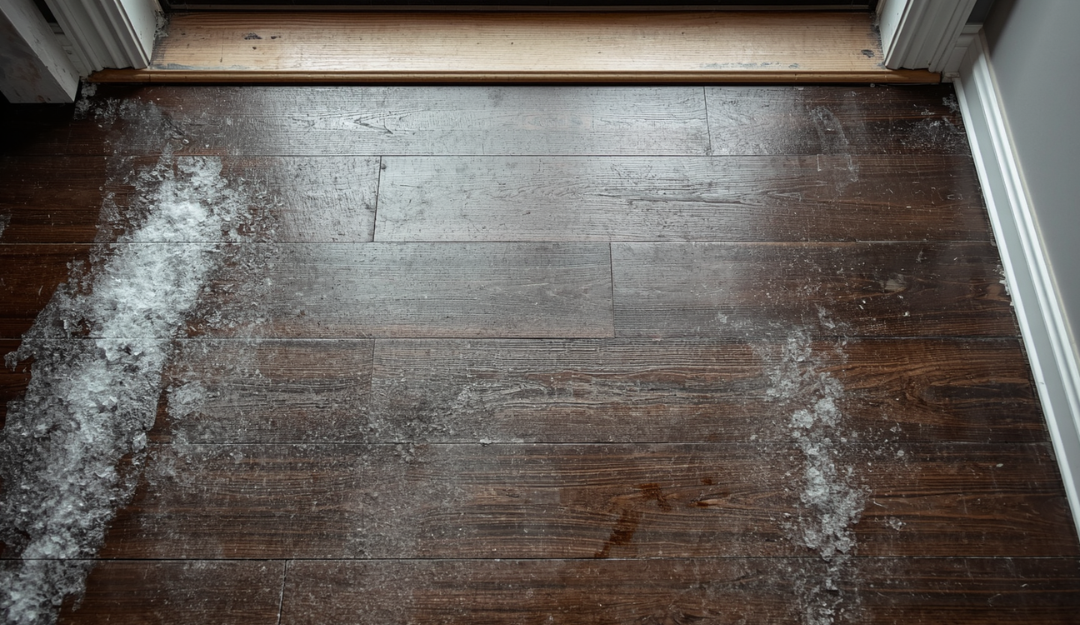
If you live anywhere between Yonge Street and Bathurst, you already know the drill: the snow comes, the plows roll, and within a week your front entry looks like someone dusted it with chalk. Those white, hazy patches on your hardwood aren't dirt — they're road salt residue, and if you let them sit through an Aurora winter, they can permanently damage the finish on your floors.
We've cleaned hundreds of homes across Aurora, Newmarket, and King City through six winters now, and salt damage is consistently one of the top three issues we see between November and April. The good news is that catching it early means it's almost always reversible. Here's exactly how to handle it.
Why Salt Damage Hits Aurora Homes Harder Than You'd Think
York Region uses a combination of rock salt (sodium chloride) and liquid brine on local roads, and they apply it generously — often before storms even arrive. If you've ever driven down Wellington Street East after a January snowfall, you've seen the white residue coating the asphalt. That same residue rides home on your tires, your boots, and your dog's paws.
Salt damages hardwood floors in two ways. First, it's hygroscopic — it actively pulls moisture out of the wood finish and the boards themselves. Over time, this dries out the polyurethane coating and can cause it to crack or cloud. Second, when salt mixes with the moisture from melting snow, it creates a mildly alkaline solution that etches into the finish, leaving behind dull, hazy patches that won't wipe away with a regular mop.
Homes near commuter routes — anything off the Aurora GO Station, the Yonge Street corridor, or the Bayview and Wellington intersection — tend to see the worst of it because of the sheer volume of salted road traffic.
How to Identify Salt Damage on Hardwood
Not every white mark on your floor is salt. Here's how to tell the difference.
White Haze and Cloudy Film
This is the most common sign. You'll see a chalky, almost dusty-looking film, usually concentrated within three to four feet of an exterior door. It often shows up worst near the front entry, the mudroom, and any door your pets use. If you wipe it with a dry cloth and see white residue come off, that's salt.
Dull or Etched Finish
If the haze stays after you've cleaned the area, the salt has likely started to etch the polyurethane. The wood underneath is usually still fine — it's the finish that's been compromised. You'll notice these patches are dull while the surrounding floor still has its sheen.
Discoloration and Warping
This is the worst-case scenario. Dark spots, raised grain, or warping along board edges mean moisture has gotten through the finish and into the wood itself. At this stage, DIY fixes won't cut it — you're looking at sanding and refinishing.
Step-by-Step: How to Remove Salt Stains from Hardwood
For fresh or moderate salt residue, this method works on the vast majority of finished hardwood floors.
What You'll Need
White vinegar, warm water, two clean microfibre cloths, a microfibre mop (not a string mop, and never a steam mop on hardwood), and a spray bottle. That's it. Skip the commercial "salt removers" — most of them are just diluted vinegar at four times the price.
The Vinegar Solution Method
Mix one cup of white vinegar with one gallon of warm water. The mild acidity neutralizes the alkaline salt without damaging polyurethane finishes when used at this dilution.
Spray the solution lightly onto the affected area — you want it damp, not wet. Standing water is the enemy of hardwood. Wipe in the direction of the wood grain with a microfibre cloth, applying gentle pressure on the haziest spots. Follow immediately with a dry microfibre cloth to remove any remaining moisture.
For high-traffic entry areas, you'll likely need to repeat the process two or three times to fully clear the residue. Don't be tempted to make the solution stronger — straight vinegar can dull your finish over time.
For Stubborn or Older Stains
If you've found stains that have been sitting since December, a single pass won't fix them. Try a 50/50 vinegar and water mix applied with a microfibre cloth, working in small sections of about two square feet at a time. Let it sit for 30 seconds, then wipe and dry thoroughly. If the haze is still there after two passes, the finish is etched and will need professional attention.
What NOT to Do
Do not use a steam mop on hardwood, ever — even if the box claims it's safe. Heat and moisture together are how cupping and warping happen. Avoid ammonia-based cleaners, full-strength vinegar, and any product with bleach. And skip the magic erasers on finished wood — they're abrasive enough to dull the polyurethane.
Preventing Salt Damage Through Aurora's Long Winter
The best stain is the one that never lands. Aurora winters run from late November through early April, which means roughly five months of salt exposure. A good prevention system pays for itself in saved refinishing costs.
Set Up a Three-Layer Entry System
At every exterior door, you want three things in this order: an outdoor coir or rubber mat to knock off the worst of the slush before it touches your floor, a boot tray with a raised lip just inside the door to catch melt-off, and an absorbent indoor rug or runner extending at least four feet into the home.
If you only do one of these, make it the boot tray. The amount of salt-laden meltwater an average household tracks in over a single February week is genuinely surprising — we've measured it.
Pet Paw Protocol
If you have a dog and you walk it through any subdivision in Aurora — Bayview Wellington, Aurora Highlands, Regency Acres, anywhere with sidewalks — its paws are bringing salt inside. Keep a small towel and a bowl of warm water at the door, and wipe paws after every walk. Salt is also genuinely uncomfortable for dogs, so you're doing them a favour.
Weekly Winter Floor Maintenance
Once a week from November through April, do a quick pass with the vinegar solution on entry areas, hallways, and any room with a door to the outside. This prevents buildup and means you're never dealing with months of accumulated damage at once. For homes with heavier traffic — families with kids, multiple pets, or commuters — twice a week is more realistic.
When to Call a Professional
Some situations are beyond what a microfibre mop can fix. If you're seeing dull etched patches that won't restore with vinegar, dark moisture spots, raised grain, or warping along board edges, it's time to bring in either a hardwood refinishing specialist or a deep cleaning service.
A professional deep cleaning service can address heavy salt buildup that's gone past the point of weekly maintenance — particularly useful if you've inherited the problem mid-winter or if your floors haven't been properly maintained since the snow started. We handle this regularly for clients across Aurora, Newmarket, Bradford, and King City, and a thorough deep clean often saves homeowners from premature refinishing.
If you're preparing to list your home, salt-damaged entryways are one of the first things buyers and listing agents notice during winter showings. A professional pre-listing clean before photos can make a measurable difference in how the space presents.
Protect Your Floors Before the Next Storm Hits
Salt damage is cumulative. Every week you let it sit is another week the finish is breaking down — and by March, what could have been a 20-minute fix becomes a refinishing job.
If your hardwood floors need a thorough winter reset, or you'd like to set up recurring maintenance cleaning that handles salt before it becomes a problem, we'd be happy to help.
Book a deep clean or recurring service with Mayfair Home Cleaning today — call 289-201-1873 or get a free instant quote online. We service Aurora, Newmarket, King City, Bradford, and surrounding York Region communities.
Frequently Asked Questions
Q1. Will vinegar damage my hardwood floor finish?
At the right dilution — one cup of white vinegar per gallon of warm water — vinegar is safe on most polyurethane-finished hardwood floors. Full-strength vinegar can dull the finish over time, so always dilute and dry the floor immediately after wiping.
Q2. How often should I clean salt residue from hardwood floors in winter?
At least once a week from November through early April, focused on entryways, hallways, and any room with an exterior door. Homes with kids, pets, or daily commuters should clean twice a week to prevent buildup.
Q3. Can road salt permanently damage hardwood floors?
Yes, if it's left untreated for several months. Salt etches the polyurethane finish and can pull moisture from the wood, leading to dull patches, discoloration, and eventually warping. Caught early, the damage is almost always reversible.
Q4. Is it safe to use a steam mop to remove salt from hardwood?
No. Even steam mops marketed as hardwood-safe combine heat and moisture, which is the leading cause of cupping and warping in hardwood floors. Use a damp microfibre mop instead.
Q5. How do I prevent salt damage on hardwood floors in Aurora?
Use a three-layer entry system at every exterior door: an outdoor mat, an indoor boot tray with a raised lip, and an absorbent runner extending at least four feet inside. Wipe pet paws after every walk and do a weekly vinegar-and-water pass on entry areas.
Q6. What's the difference between salt haze and a damaged finish?
Salt haze wipes away with a damp microfibre cloth and a vinegar-and-water solution. If the dull patches remain after cleaning, the polyurethane finish itself has been etched and will need professional restoration.
Q7. Do hardwood floors damaged by salt need to be refinished?
Only if the damage has gone beyond surface haze. Etched finishes, dark moisture spots, raised grain, or warping all require sanding and refinishing. Most salt residue cleans up without ever reaching that stage if it's addressed within a few weeks.
Q8. Does Mayfair Home Cleaning service homes outside Aurora?
Yes. We provide professional house cleaning, deep cleaning, and move-in/move-out services across Aurora, Newmarket, King City, Bradford, Markham, Richmond Hill, Keswick, Woodbridge, Kleinburg, and surrounding York Region communities. Call 289-201-1873 for a free quote.